Work Wednesday—Well Water


We’ve all heard about “additives” in municipal water supplies, or lack thereof . . . Many people assume well water is perfectly safe. And most of it is.

When we rented a 200-year-old house on a cattle ranch in Texas, we had well water. It was kind of gray and smelled like sulphur. The owner told us it was perfectly fine water, that he’d been raised on it.

I shrugged it off until we were cleaning the place before we actually moved in. I added bleach to a bucket of that water, and it turned yellow. Pee yellow.

I was NOT drinking that water.

So we had bottled water for drinking and cooking. No one wanted to take a bath in it either, so the kids started showering instead. No big deal.

Fast forward to the farm.

The well here is located near the old house, the one we had torn down. I suspect it’s been in use since the early- to mid-1900s, but we have zero information about it. Last year, after closing, I ran a simple home test.

Everything came back negative. Good to know.

We’ve been using that well for everything, drinking, cooking, bathing, washing clothes and dishes. No problems.

I read an article in the local paper that said you should test your well annually, which made sense, especially during drought.

Then, a week or so later, I read you should test after periods of heavy rain.

We’d had both, so I bought another home water test.

It came back positive for bacteria. A 48-hour test, and the sample stayed purple (good) for 36+ hours, then turned yellow (bad).

I thought maybe it was a fluke, a bad test, or user error, so I ordered a two-pack of tests.

The first one was positive again, for bacteria.

This time, I called the health department. They said they had a kit and I could collect a sample, which would then be sent off to Jeff City, and I’d have results in a week to ten days. Then they said if we weren’t sick, it was no big deal.

At this point, I’m using bottled water for drinking and cooking.

I keep forgetting about teeth-brushing, though . . . oops.

I called the manufacturer of the test. We determined that maybe I should have put the sample in a dark place. Now, this wasn’t an issue before, but the gal said she’d send me another test, so I went ahead and used my last pack.

Kept it in the dark. Yellow after 36+ hours. Weird.

I called a well company. This is good on several levels:

  1. They will check the pump and assorted components
  2. They’ll tell us how deep the well is and how many gallons we’re getting
  3. They’ll run a test for bacteria and find out what it is
  4. They’ll shock the well

We can do the last, we know how, theoretically, but my husband wants a professional the first time. And one of the things I learned during all this is that, before 1987, in Missouri, you weren’t required to report a new well. After that, the state has records of what company drilled it and how deep, etc., etc.

Also, this gives me a good idea of how much water we actually use. The common consensus is that you should have enough water on hand for any “duration” of one gallon per day per person.

This is crazy. For two of us, I’ve used at least that much per day just for cooking and drinking and prepping foods. Factor in working outdoors and washing hands often, not to mention showering, one gallon per person per day is the absolute minimum for survival—not for regular, daily activities.

So, the well guys finally got here yesterday afternoon. Mostly, the delay means that I don’t know for sure what’s in the water until tomorrow. Here’s what I learned:

Our well is about 190 feet deep; the pump sits at 147 feet. The water level is 80 feet down.

The well was most likely put in in the late 60s, but could have been an extension of a hand-dug well going back a few decades or so.

The pump is about 20 years old, but everything is working just fine at the rate of about 7 gallons per minute.

They did replace a couple sections of pipe, and took the water sample first before everything was stirred up.

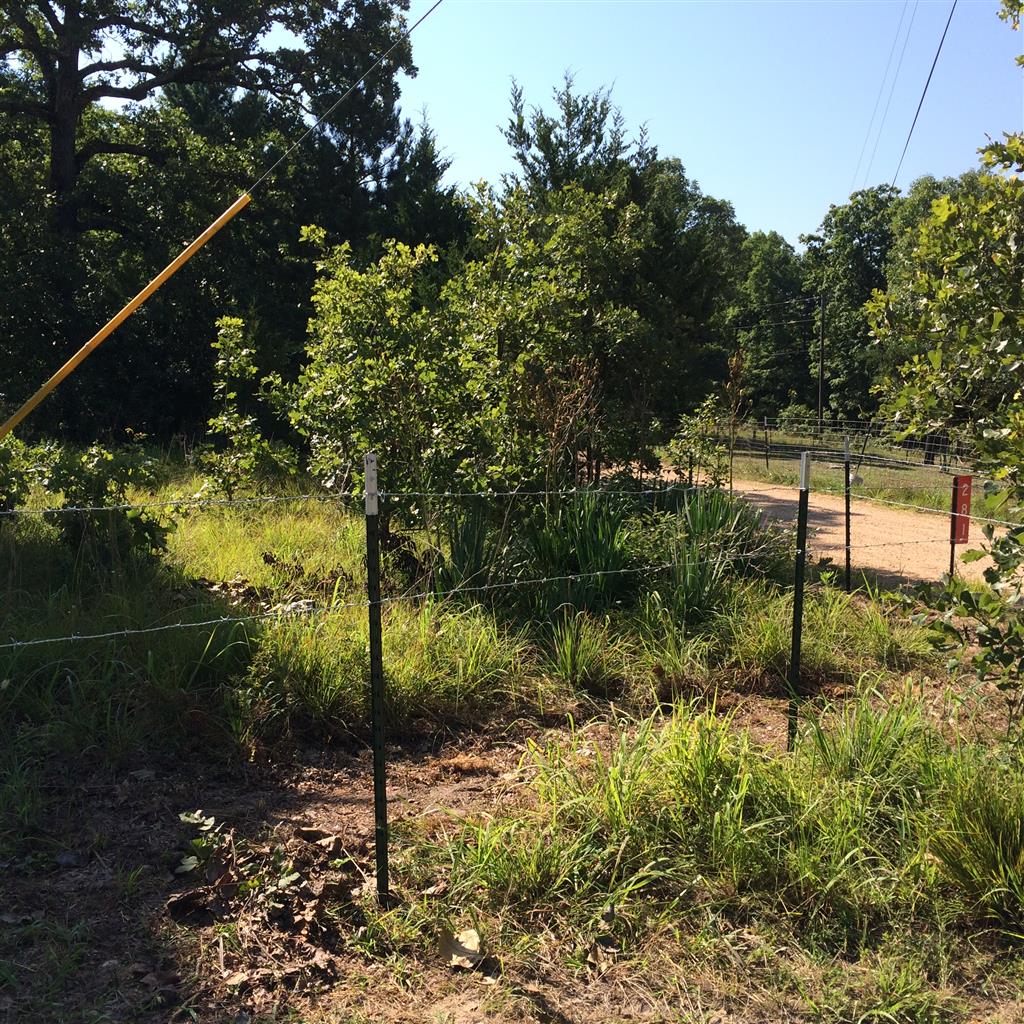
So now we wait. And while we do so, the front fence is progressing:
004


005


Prep Monday—Fencing and Security


How important is perimeter fencing? That depends. There are always ways to enter a property, but there are things you can do to make that access more difficult.

The biggest issue you’ll face is the size of your acreage. First, it’s much more expensive and time-consuming to fence in 100 acres than 20; second, it’s harder to patrol and watch over a larger area when someone finds a way inside.

Look around, out in the country, and take note of all the properties you see. Some will look beautiful, with a wide expanse of lawn leading up to the front door; others are so brush-covered that you can’t see past the mailbox.

You want yours to look like the second one.

It doesn’t have to look like that straight on up to your front door, of course. Police departments all over the country tell you to trim your landscaping so criminals have fewer places to hide—and if you live in the ‘burbs or the city, that can be very helpful.

But your first line of defense is your perimeter.

While driving from town out to our farm, I’ve noticed many places that would appear attractive to gangs or hordes or any desperate person: houses next to the road and the aforementioned lawns with a welcoming entrance and a clearly visible home.

Ours has a large barn, yes, but there’s no helping that—and many places you might be interested in purchasing do have homes near the gate; the reasoning is usually the cost of running utilities from the main power lines to the house, or even the well location. Fortunately, our barn is nearly 20 years old and has a badly rusted door—not the first choice, probably, of someone looking for something, even if they found their way back to our road.

But you certainly don’t have to make things easy for trespassers.

Dirty up that shiny new gate and the new fence posts; distress them a bit, as it were. Use a second-hand gate and second-hand barbed wire or fence panels. It doesn’t have to, and shouldn’t be, “pretty.” This is a working homestead, right? Not a vacation place?

Don’t get me wrong, everything should be in excellent working order—just not new and screaming dollars.

I also don’t recommend an electric fence. When SHTF and your power goes out, you’ll need at least one other generator to power that, depending on how many feet you installed.

Think natural barriers: poison ivy, sticker bushes, anything with thorns. Around here, you’re also likely to find dumping areas on your property, full of things that didn’t burn, like tires (good hiding places for snakes) or rusted wire. Put those things in heavy brush behind your fence lines. Even if someone cuts the fence, they’ll think twice or at least slow down when they hit the less-visible obstacles.

Of course, when you do regular checks, you’ll have be careful too . . .

Speaking of checks, you should inspect your fence lines at least weekly, and more often when SHTF. And you may have to take steps to remove the perpetrator, if constantly cut wire becomes an issue. No, I’m not advocating shooting anyone—it’s likely just kids come to fish your pond—but you should probably be in contact with law enforcement.

When SHTF comes, all bets are off; likely law enforcement will have better things to do, or even be nonexistent. But those kids going fishing are now taking food from your family . . .

Once someone is on your property, uninvited, you need to be prepared. You need a plan in case this happens, especially if you own a target property, e.g., a fancy entrance or one with easy access and visibility.

What will you do? How will you handle it?

I can’t say what I’d do, exactly—it depends on many circumstances. But I do know this:

They can’t stay.

The sooner they leave, the better.

And if you walk your property on a regular basis, you’ll know who and what and why long before they become entrenched. I don’t care if they’re on the opposite end of your forty acres and you can’t see or hear them, they’re using YOUR resources because they didn’t stock up on and have their own.

Your job is not to provide for everyone, or anyone. Your job is your family.